
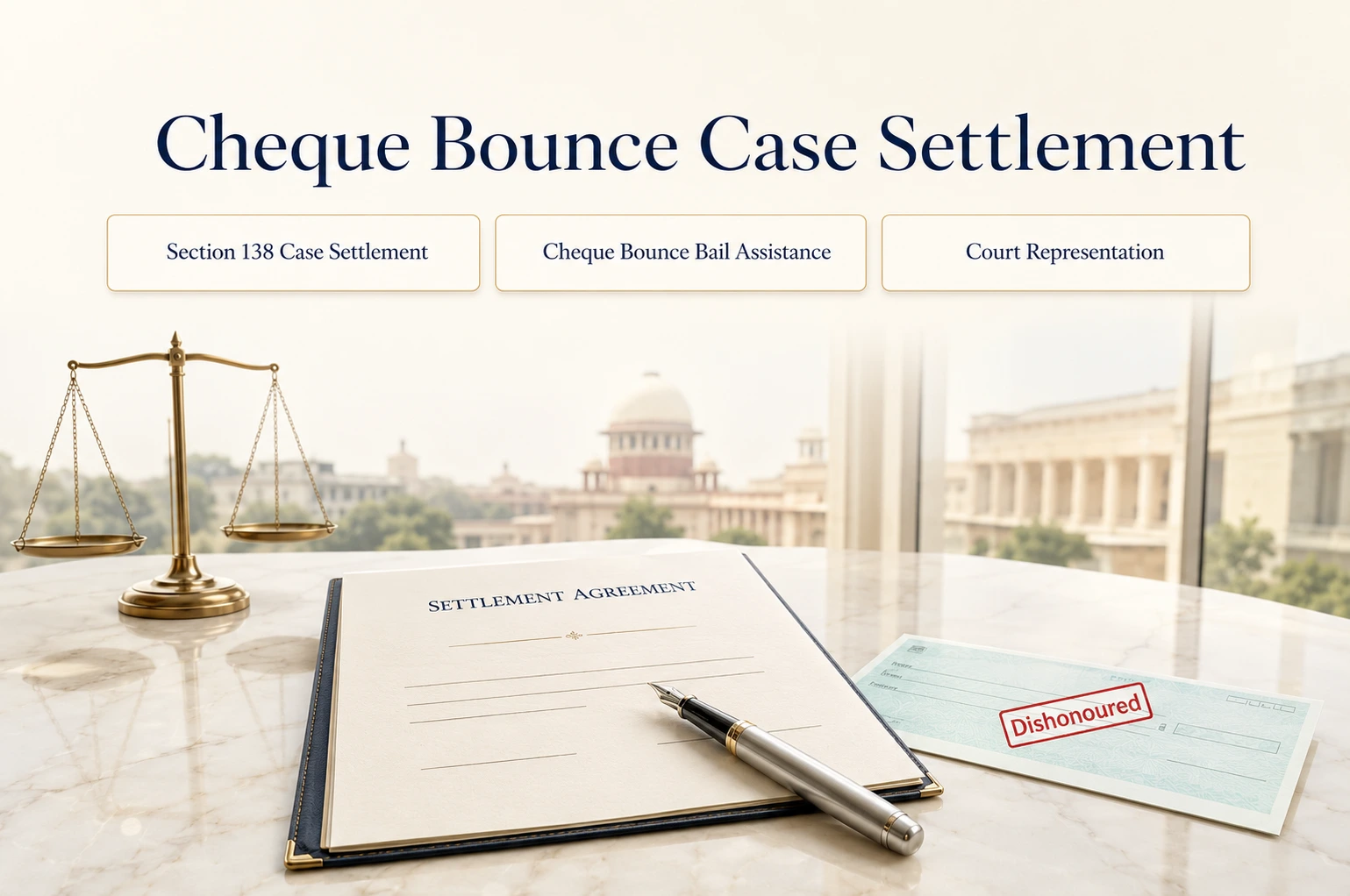
Can a Cheque Bounce Case Be Settled After Filing a Section 138 Complaint?
Yes you can compound a cheque bounce case even after filing of complaint under Section 138 NI Act, 18 81. Written settlement can be placed before the Court by the parties who may pray for compounding of offence. Section 147 specifically allows compounding of offences under the Act subject to recording satisfied by the Court to the facts and circumstances of the case. Section 147
Typically, when a complaint under Section 138 of the Negotiable Instruments Act is filed, it has a feeling of “heat.” Business payment has not gone through, a personal loan is unpaid or a supplier is waiting on cheque monies which have bounced. Once summons are issued, both parties are feeling squeezed. The complainant wants their money. The drawer doesn’t want to keep losing time at court, pay costs or risk conviction.
Parties can still settle. It’s not too late just because a complaint is filed, evidence has begun or the parties are appearing before a Magistrate for the first time. In my experience, Advocate BK Singh handles many cases where parties are not keen to negotiate until after they have appeared in Court and realize the dispute is ‘now for real’.
The settlement agreement should not be an informal oral “I’ll pay you promise”. Terms of payment, total amount payable, instalments (if any), pending interest, terms to withdraw/comound and what happens on default should all be recorded properly. A well drafted settlement agreement minimizes uncertainty for everyone.
The Importance of Sec 138 Settlements Everywhere In India 2026
Cheque dishonour cases are common among traders, business entities, landlords and tenants, employers and employees, family money lenders and borrowers, doctors, and consultants all over Delhi NCR and India. When a cheque bounces it can choke the cheque drawer's cash flow, harm their commercial credibility and leave them stressed.
If the drawer ignores summons, they could face hostile court actions like bailable or non-bailable warrants (NBWs) at the appropriate stage of litigation. If the complainant wants to continue litigation, rather than consider a viable compromise they could face years of hearings with no money coming in.
Advocate BK Singh advises parties to consider their stage of litigation, the amount of money at stake, the ability to pay, and desire for a written record before signing any compromise.
Quick Facts
- Section 138 deals with the dishonour of cheque issued for the discharge of any legally enforceable debt or liability.
- Cheque bounce complaint can be settled after filing as well as even at later stages through the process of the Court.
- Offences under NI Act are compoundable under Section 147.
- Settlement must be made through a written deed of settlement along with proof of payment.
- Proper intimation to the Magistrate through an application or statement.
- Settlement at a later stage can invite cost or closer scrutiny of the matter by the Court in certain cases.
- Settling of cheque bounce complaint will not extinguish the separate civil claim/loan claims/ business claims of the parties unless it is provided in the settlement agreement.
What Does Settlement After Section 138 Complaint Mean?
Settlement after filing means that the complainant as well as the accused enter into an agreement for settlement of the amount involved in the cheque and other terms. The parties jointly apply to the court to record the compromise and allow compounding of offence. After compounding is allowed, the criminal complaint ends with an order of acquittal.
A Section 138 proceeding is not a recovery suit. This statutory offence relates to dishonour of cheque for discharge of a legally enforceable debt or liability. The Act mandates presentation of cheque within its validity period, issuance of a statutory demand notice within 30 days of bank-returned information and failure to make payment within 15 days of receipt of notice. Section 138
For more on bail and monetary disputes click here.
Advocate BK Singh analyses if the offered settlement indeed settles the dispute or leaves certain claims open-ended.
Law Regarding Compound Cheque Bounce Case
Section 138 of NI Act induces the liability on dishonour of cheque which was issued by the drawer for the discharge of any legally enforceable debt or liability. Such offence is triable by the competent Magistrate as provided under the Act.
Section 147 allows the parties a legal avenue to compound such offences under NI Act. Accordingly the Court can take an application for settlement, alongwith consent statements, affidavit, compromise deed, proof of payment, copy of cheque and complainant’s statement that matter is settled between the parties.
Settlement can be done at any stage either during trial or appeal or revision, procedure differs from each stage and the Court which will entertain differs. Advocate BK Singh will advise whether such compounding application needs to be filed before the trial court or some other method is to be followed before the appellate court.
Who might require Post filing compromise/settlement help?
Sometimes these cases.
- drawer against whom summon has been issued in 138 Cases.
- complainant who has received a part payment and wants to settle finally.
- business associates who want to settle dues for outstanding invoices/ supply dealings.
- directors against whom proceedings have been initiated for cheque- bounce.
- Relatives and family members against whom complaint has been filed for personal loan/friendly loan amount.
- Individuals who have issued multiple cheques/ want to settle defaults on instalments payments/ have related Civil suits.
Click here to read cheque-bounce and criminal help handled by Best Bail Lawyer.
What is the General Process of Settlement?
The settlement starts with being clear about how much money will actually change hands. Write down what the cheque will be for (the amount agreed), interest or costs if the parties have agreed to this, any payments already made, litigation expenses, and any associated invoices, loan documents or acknowledgements.
Then, the terms of the agreement need to be put in writing. “The matter is settled” is not enough and can lead to disaster down the track. Clearly specify who is paying whom, how they will pay, by when it will be paid, whether it is full and final payment and what happens if an instalment is not made.
Once payment or agreed security has been made, an application for compounding may be filed with the court where the complaint is pending. You and the other party may be required to attend Court to confirm your consent and file affidavits with supporting documents. Advocate BK Singh can guide you in a way that what gets filed in Court is a true reflection of the settlement reached instead of half of a verbal agreement.
Documents and Evidence to Prepare
A well settled claim gets strengthened if the record is maintained properly. Prepare copies of:
- Cheque and bank return memo.
- Statutory demand notice and service slip.
- Complaint, summons & previous orders passed by the court.
- Settlement deed/joint application/affidavits.
- Bank passbook copy/receipt of demand draft or receipt of payment.
- Invoice/loan agreement/ledger/Whatsapp chat or written admission, if any.
- Identity proof and power/documents of company or authorized person.
Advocate BK Singh prefers holding the original receipt of payment till the final order is obtained from court.
When Should You Consult a Lawyer?
Get legal advice right away if you have been served with summons/warrant/draft of settlement/proposal for part payment/demand for an exorbitant amount. It is also wise to meet a lawyer if there are multiple cheque cases pending against you, cheque has been issued by a company or the underlying transaction is contested.
An experienced lawyer will know the difference between a bona fide settlement offer and an agreement that leaves you open to future liability. Advocate BK Singh can go through the complaint, cheque memo, payment proposal and stage of the case in court before either party agrees to any conditions.
What Services can Best Bail Lawyer Provide
Best Bail Lawyer will offer cheque bounce specific help once we know the details related to the summons, warrant, court you have to appear in and documentation related to your settlement. Our primary objective is to base our discussion on the actual complaint record, payment status & court where your case is pending.
We, Advocate BK Singh will help you to review the settlement deed, compound application, help you with warrant issues, appear on your behalf in the concerned court and give you a practical view of what can be done legally next. There should be no guaranteed legal outcome in any legal matter. Every case is different and based on the documents and facts.
FAQ’s
Q1. Can you settle a Section 138 case after summons have been issued?
Ans. Yes. You can settle after summons and apply to the court to compound the offence under section 147 of the NI Act.
Q2. Does the settlement need to be in the form of a written deed?
Ans. Yes. It is highly recommended that you execute a written deed which documents the payment terms, includes full-and- final settlement wording and sets out each party’s responsibilities.
Q3. Does the complaint just go away if we make a payment?
Ans. No. You will need to notify the court and obtain an order from the court to compound the offence or dispose of the matter.
Q4. Can I settle even after I’ve been convicted?
Ans. Yes. A settlement can be looked at when you file an appeal. The process can vary depending on what stage the case is at and the specific facts of the record. Advocate BK Singh can review the case details and advise on what process is available.
Q5. Does the complainant have to consent to settle?
Ans. Typically yes. Compounding is based on a bona-fide agreement between the two parties. It is best not to force someone to accept settlement if they aren’t sure.
Q6. Can I settle a cheque bounce case by paying in instalments?
Ans. Yes. The parties are free to agree to instalments, but be sure to clearly set out the due dates, consequences of default and when a “no objection” will be provided.
Q7. What if the accused wants to pay some amount now?
Ans. Partial payment will not result in the complaint being struck automatically. You and the other party will need to come to an agreement if the remaining balance will be paid or if the complaint will proceed.
Q8. Can you settle a company cheque- bounce?
Ans. Yes. When settling with a company make sure the terms of settlement clarify who the company is, who the authorised signatory is, which directors are named in the complaint and if applicable, where the funds will come from.
Q9. Will I get costs from the court if I settle late?
Ans. This depends on how far the case has proceeded and the individual court. If a settlement is reached at a later stage it may be subject to more scrutiny from the Judge. Costs could be ordered at the discretion of the Judge.
Q10. Can the complainant still open another case after we sign a full settlement?
Ans. It is possible, but having a clearly worded full-and- final settlement should minimise this risk. The effectiveness of such a clause would depend on the wording and facts at hand. Advocate BK Singh can review your settlement before you sign it.
Conclusion
A complaint filed under Section 138 can never stop you from settling.
Gift your settlement document that has all facts recorded, achieve proofs of payment, and application in proper format to court so that your cheque bounce matter gets concluded amicably with clean chit.
Do not gamble your pending case nor settle based on assurances. Meet Advocate BK Singh, discuss your matter and take his review before filing a compromise or compounding application in court.
Author Bio
Advocate BK Singh is practicing law in India and part of Best Bail Lawyer team. He has handled cases related to criminal matters, cheque bounce cases, appearances, warrant issues and documentation. He has helped clients with NI Act proceedings i.e. section 138 complaints against them, what is a settlement document, compounding application to court and what to do at the court stage. Advocate BK Singh evaluates each case on the basis of Complaint, payment status and procedure followed.